
Compare batch and integrated poultry scalding equipment by bird type, target output, heating method, water movement and site utilities.
Scalding prepares poultry for feather removal, so equipment selection should begin with the bird profile and the required production flow. A useful comparison looks beyond the tank itself and checks how heating, water movement, loading, discharge and the following plucking stage work together.
1. Confirm the bird and output profile
Start with poultry species, average live weight, expected size variation, target birds per hour and daily operating hours. These inputs affect batch loading, dwell time and the practical connection to the feather-removal stage.
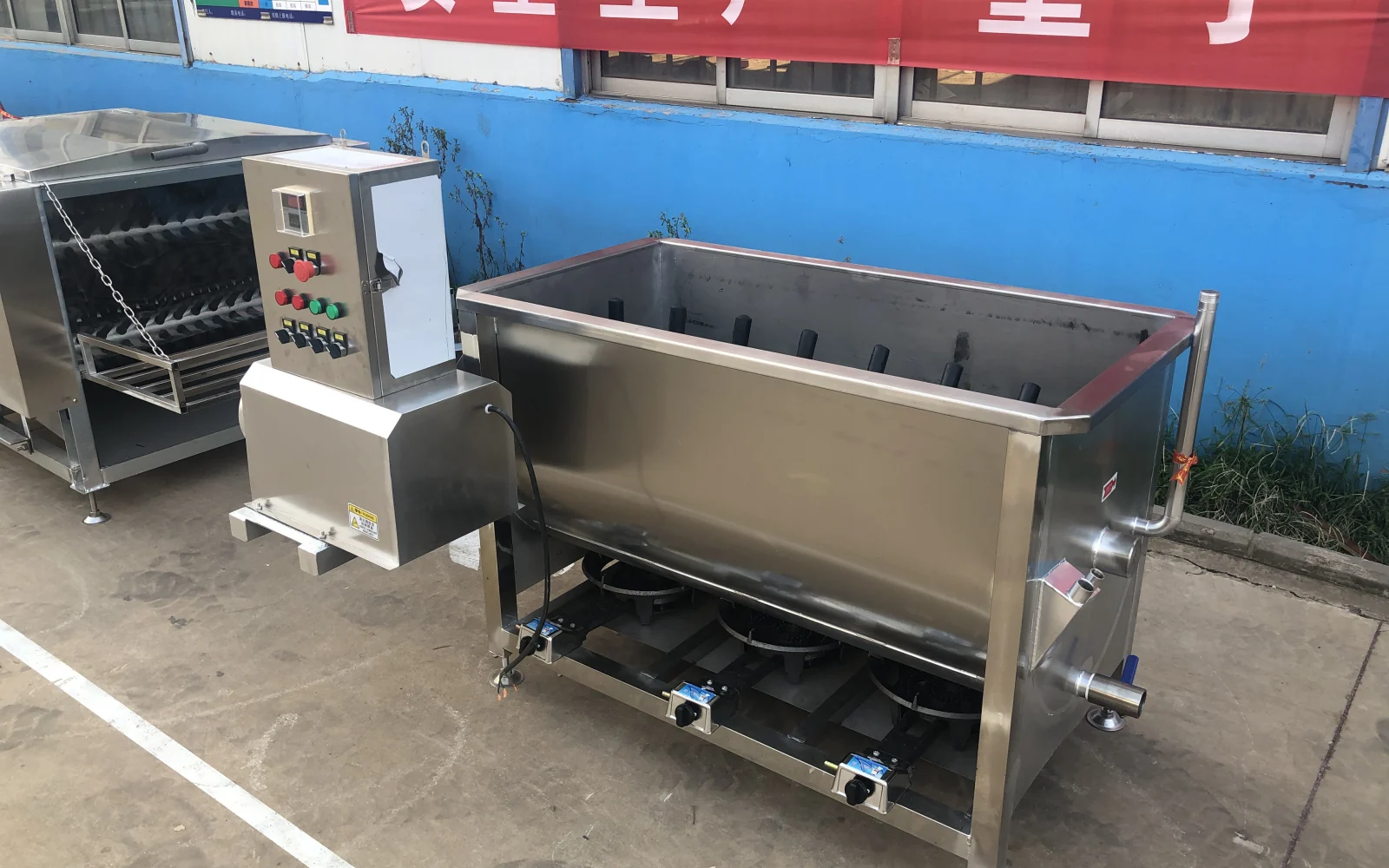
For smaller operations, a batch scalder can provide a straightforward workflow. The documented dual-heating poultry scalding tank has a stated maximum output of up to 300 chickens per hour. Actual output still depends on batch size, bird condition and operating practice.
2. Choose batch or integrated operation
A batch tank is loaded and unloaded in cycles and can suit a compact plant with manual transfer. An integrated unit connects more of the primary process and reduces handling between stages. For example, the automatic scalding and plucking unit combines related operations in one compact arrangement.
For a continuous overhead line, the scalder must be selected as part of the complete process. Conveyor speed, immersion path, dwell time and the plucking section need to be balanced against the same target output.
3. Match the heating method to the site
Available equipment may use electric, gas or steam heating. The practical choice depends on local energy availability, electrical capacity, fuel supply, operating cost and the plant safety plan. The dual-heating batch tank documented here includes electric heating pipes and three gas burners, giving two available heat sources in the supplied configuration.
Exact power, fuel demand and operating controls should be confirmed in the technical proposal for the selected machine rather than inferred from a general product description.
4. Review water movement and bird handling
Even exposure to heated water supports more consistent preparation for plucking. Different machines may use mechanical turning or air agitation. The documented batch tank uses a motor-driven shaft with rubber fingers to turn birds through the water; other scalders can use a blower system to agitate the water.
The correct water temperature and dwell time are process settings, not universal numbers. They should be tested against poultry species, weight, feather condition and the required finished-product quality.
5. Check filling, draining, cleaning and safety
Review the water inlet, waste outlet, drainage route and access for routine cleaning. Confirm where the machine will stand, how operators load and unload it, and how hot surfaces, gas connections and electrical controls will be managed under local requirements.
Also confirm the required food-contact material grade. If a source specification does not state the stainless-steel grade, request written confirmation before ordering.
6. Prepare the information for equipment selection
Before requesting a quotation, provide the poultry species, average live weight, target birds per hour, working hours, preferred heating source, electrical supply, water and drainage conditions, available floor space and the intended plucking equipment.
These details allow the supplier to check whether a batch scalder, compact integrated unit or continuous line is the appropriate starting point. Send your processing requirements to discuss a project-specific selection.